The stars I plot looks good, but. can you double check that your door has nothing blocking it, prefer to see water. On the north side prefer to have another block sheltering you (prefer). ~ I think this landscape is not present becasue you say you are have some obstruction in career, wealth and possible unnecessary gossip / argument. Importantly, did you put something in the south east corner of your main bedroom (if yes, remove it or shift it ).
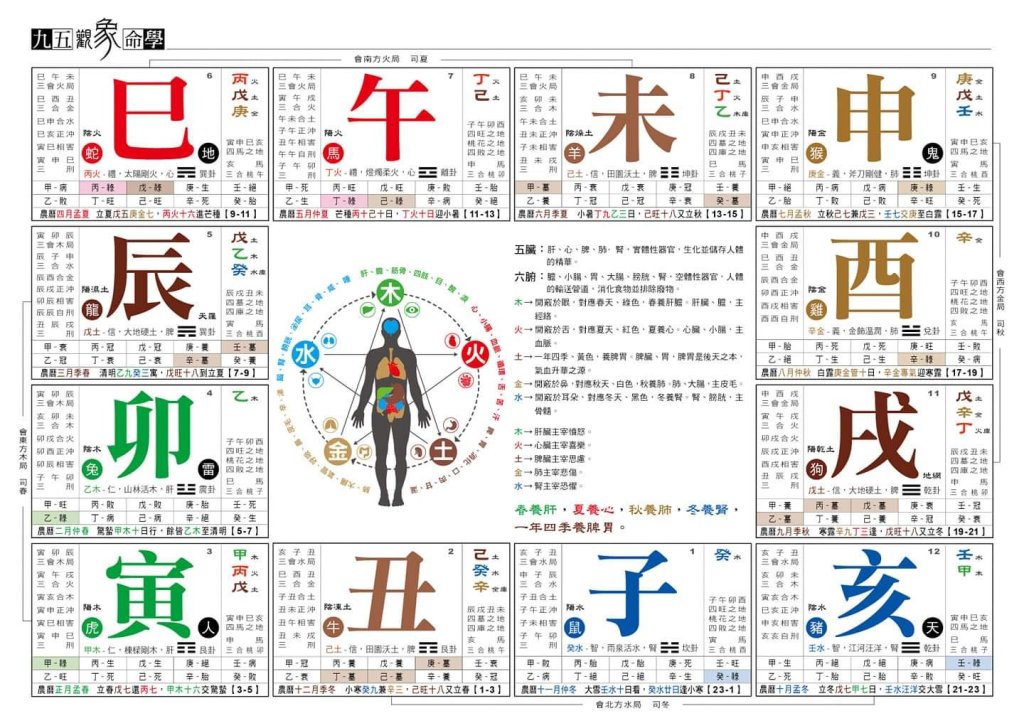
桃花 (Peach Blossom), in BAZI is relate to a Zodiac Animal that give energy to a San He combination. So, why some Peach Blossoms sound like sales talk and some able to realise the effect? I’ll look at the various layers of Feng Shui instead of simply a yearly analysis.
For example,
Snake Rooster Ox, blossom with Horse
巳、酉、丑 桃花在午…
Tiger Horse Dog, blossom with Rabbit
寅、午、戌 桃花在卯…
Monkey Rat Dragon, blossom with Rooster
申、子、辰 桃花在酉…
Pig Rabbit Goat, blossom with Rat
亥、卯、未 桃花在子…
To make use of this information to enhance network, social and love luck. For example a person male born in 1978, based on his life Kua (命卦), it is Xun (巽). And, Yan Nian (延年) that govern relationship is in East. In the east sector comprise of Tiger and Rabbit. Rabbit is a peach blossom and it is nurtured by TaiSui for 2019. He can tap into this sector to enhance his network, social and love luck.
Coincidentally, the yearly Officer Flying Stat land in the east. If the house faces or has bedroom or study room which he is using for his work endeavors, it is actually an auspicious combination for career advancement as well as for social and love luck. Same principle, it work for female born in 1998, year of Tiger.
This is an actual advise I’ve given someone this year since he has the blessing of both the time (i.e born in 1978 + this 2019 TaiSui helping) and space (i.e. the bed headboard faces the east). And, of course his BAZI is moving into wealth and love luck cycle.
The Earth we lived in has a invisible force of magnetic field, also known as the geomagnetic field. This magnetic field extends from the Earth’s interior out into space, emitting from the South Pole to the North Pole.
The Earth’s mantle is composed of iron-magnesium silicates, and the crust is composed of roughly 5 percent iron. All together, iron makes up an estimated 35 percent of the Earth’s mass.
With the environment made up of particles of iron, the geomagnetic field in turns gradually affects the movement of ocean floors and tectonic plates causing landforms, earthquake, mountains and continents.
In the human body, there is blood. In blood, there is small percentage of iron. Which is also affected by geomagnetic field, gradually over time The study of Feng Shui seek to tap on the positive Qi (stable geomagnetic fields) and avoid the negative Qi (fluctuating geomagnetic fields).
Therefore, I couldn’t say that there is absolutely no Science in Feng Shui to begin with.
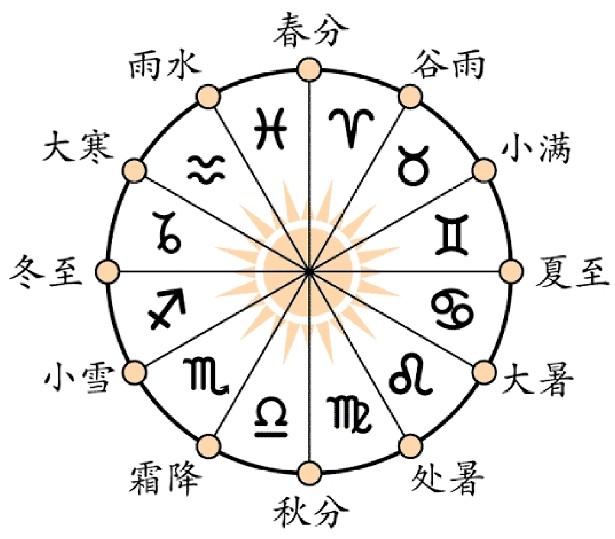
The Western Astrology, the Zodiac or the Constellations are divided into twelve signs, each occupying approx. 30° of celestial longitude.
The Constellations are Aries, Taurus, Gemini, Cancer, Leo, Virgo, Libra, Scorpio, Sagittarius, Capricorn, Aquarius and Pisces.
This 12 signs form a celestial coordinate system, or more specifically an ecliptic coordinate system, which takes the ecliptic as the origin of latitude and the Sun’s position at vernal equinox as the origin of longitude.
Meaning, where the sun is, this is Constellation of reference. In other words, if the sun is at Aquarius, in the night sky (opposite to where the sun position) we could see Constellations like Cancer and Gemini as well as Orion.
Reference it to the chinese system, each Constellation span across 1 Jie Qi (節氣). Each Jie Qi (節氣) span around 30.4 days. This info is then place on the LuoPan (羅庚), each Jie Qi (節氣) taking 15 degree position, aligning to the 24 mountain for 太阳到山盤 application for auspicious date.
Both the Western and Chinese system in this aspect shares some similarities of using the sun as an object of reference to read the energy for each celestial block.
Aquarius 21 January – 19-Feb
大寒 1月19-21日交节
立春 2月3-5日交节
Pisces 20 February – 20-Mar
雨水 2月18-20日交节
惊蛰 3月5-7日交节
Aries 21 March – 20-Apr
春分 3月20-22日交节
清明 4月4-6日交节
Taurus 21 April – 21-May
谷雨 4月19-21日交节
立夏 5月5-7日交节
Gemini 22 May – 21-Jun
小满 5月20-22日交节
芒种 6月5-7日交节
Cancer 22 June – 22-Jul
夏至 6月20-22日交节
小暑 7月6-8日交节
Leo 23 July – 22-Aug
大暑 7月22-24日交节
立秋 8月7-9日交节
Virgo 23 August – 23-Sep
处暑 8月22-24日交节
白露 9月7-9日交节
Libra 24 September – 23-Oct
秋分 9月22-24日交节
寒露 10月7-9日交节
Scorpio 24 October – 22-Nov
霜降 10月23-24日交节
立冬 11月7-8日交节
Sagittarius 23 November – 21-Dec
小雪 11月21-23日交节
大雪 12月6-8日交节
Capricorn 22 December – 20-Jan
冬至 12月21-23日交节
小寒 1月5-7日交节(二十四節氣歌)
春雨惊春清谷天,
夏满芒夏暑相连,
秋处露秋寒霜降,
冬雪雪冬小大寒.
Risk management is the process of identifying, analyzing and controlling possible threats that weakens a firm’s capital and/or earnings. Potential risk or threats could include a wide variety of sources (i.e. financial uncertainty, legal liabilities, strategic management errors, accidents and natural disasters).
Risk Management Processes:
1. Risk Identification – Identifying potential risks that may negatively influence the firm.
2. Risk analysis – After the specific types of risk is identified, the firm then determines the odds and frequency of occurences and its consequences.
3. Risk mitigation – Firm then develop plans, such as risk mitigation processes, risk prevention and / or contingency plans in the risk event comes to fruition.
4. Risk monitoring – A follow up plans to close the loop and to continuously review, monitor and track new and existing risks.
Now let’s, look at Feng Shui. . .
In a consultation, this normally broken down into 2 aspect. Namely, the destiny chart analysis and the house audit. In some cases, divination might be use hand in hand.
In the destiny chart analysis, I would attempt to identify the strength and weakness of the BAZI chart. With that, I then proceed to analyze the luck cycle relative to the BAZI chart; determining the headwinds and tailwinds of the current luck cycle. Analysing 5 years back and seek verification from the chart owner, at this point if the analysis is approximate, I will proceed to analyze 5 years forward. Hence, derive the odds of occurrence.
Depending on the opportunity and threat, i proceed to work out some mitigation plans and suggestions. For example a chart owner with favourable tailwinds is to acquire the network and pool together resources to achieve his /her wealth. And, for a less favourable chart which is full of headwinds, he / she could spend the effort to acquire the necessary skills set or seek job stability or pay attention to health and safety for certain years. It all about Yin Yang (陰陽).
In a house audit or a Feng Shui assessment, the main aim is to evaluate and point out which area if the house has an optimal Qi (氣) flow and use it. For example, In the destiny chart analysis I point out to learn a skills or to seek academic achievement, then in the Feng Shui assessment I would be looking for the academic star (文曲星) and make use of it. Nonetheless (honestly speaking) there are home with such auspicious star but the layout or external landform doesn’t promote the use. I’ll be frank about it and seek the next alternative to activate it. Similarly for Inauspicious Stars or sectors with hostile external landform, I’ll also highlight as risk factors and the particular years to take note as each year the TaiSui (太歲) and flying star changes.
Other tools I use; to enhance and assists includes space cleansing, date selection and divination tool such as QMDJ and MHYS. QMDJ in particular incorporates the aspect of 4 realms (天地人神) which assist the asker to derive at a decision. It also demands a lot from the practitioner using this tool.
Lastly, to close the loop, a follow up after 3 to 6 months as part of the review and monitoring process is a necessity. It also my personal commitment and a level of professionalism.
With history and lineage becoming into a robust system, with processes in place to carry out assessment both on the personal and environment level. Feng Shui is “Qualitative Risk Management” – A tool to control the variables we could; and manage those aspect we can’t.
The role of the salt water cure is to neutralize a specific quality of energy brought by specific negative stars, or feng shui energies. To achieve this effect, the salt water cure is usually applied in combination with several Metal element feng shui cures because the energies of these challenging stars are considerably weakened or even destroyed by the power of the Metal element. This happens because these negative feng shui stars — star 2, star 3, and star 5 — belong to a feng shui element that is weaker than the Metal element (star 2 and star 5 are of the Earth element, while star 3 is of the Wood element)
Most popular feng shui Metal element cures used in addition to the salt water cure are the 6 hollow metal rod wind chime, a metal Wu Lou (Chinese gourd), as well as bells and bowls made of metal. The salt water cure itself has a strong Metal element in it as represented by the six Chinese coins. The use of number six in the six hollow rods wind chime, as well as the six Chinese coins in the salt water cure, strengthens the power of the Metal element because in feng shui, six is considered to be a number with a strong Metal element essence.
What You Need for Your Salt Water Cure Salt (ideally high-quality rock salt) One Container (either glass, porcelain or metal) Water to fill the container Six Chinese Coins (made from brass) A protective mat, or a stand.
How To Make Your Salt Water Cure Fill your chosen container with salt up to 3/4 of its capacity. Place the six Chinese coins on top of the salt with the yang side up (the yang side is the side with the four Chinese characters). Fill the container with water.
Here are several ways to find out the facing direction of a house.
Find out where the most Yang side of the house is (based on the Yin Yang Theory). The Yang side is usually the side that’s most “active”. Meaning, it’s the side where the road is and where most movement occurs. It’s also the side that can gather the most sunlight and Qi energy.
Using the above method should suffice. If not, you can use these other methods as cross reference.
Find out where the backyard is. As the name implies, the backyard should be situated at the back, or the “sitting” direction. The same concept applies for the front yard.
Check the house’s design and orientation. Which side is made to greet guests?
Imagine the house as a person. Which side would be the “face” of the house? Which side would be it’s back?
If your house is the standard conventional type, the above four steps should all produce the same result. If your house has a modern artistic design, then the facing direction can be tricky to find.
One method is to use the apartment door as the facing direction. After all, the front door is the mouth of the house that gathers Qi, isn’t it?
Another method is to use the facing of the entire building as the facing direction. The reasoning for this is that all units are under one roof, and they should all share a single facing direction based on the building.


 (二十四節氣歌)


 The Luminary
You must be logged in to post a comment.