无常 “Wu Chang” refers to Wuxi and Changzhou, two cities in Jiangsu Province, China. This school of Feng Shui is named after its founder, Zhang Zhong Shan 章仲山 (名甫: 字仲山 / 号: 无心道人), a renowned Xuan Kong Feng Shui master from Wuxi.
Zhang Zhong Shan (章仲山) was a notable scholar of the late Qing Dynasty who made significant contributions to the understanding of Xuan Kong (玄空) Feng Shui, particularly by clarifying and simplifying the work of Jiang Da Hong. He is known for founding the Wu Chang Pai (無常派) school of Xuan Kong and for his commentaries on Jiang Da Hong’s writings, making them more accessible.
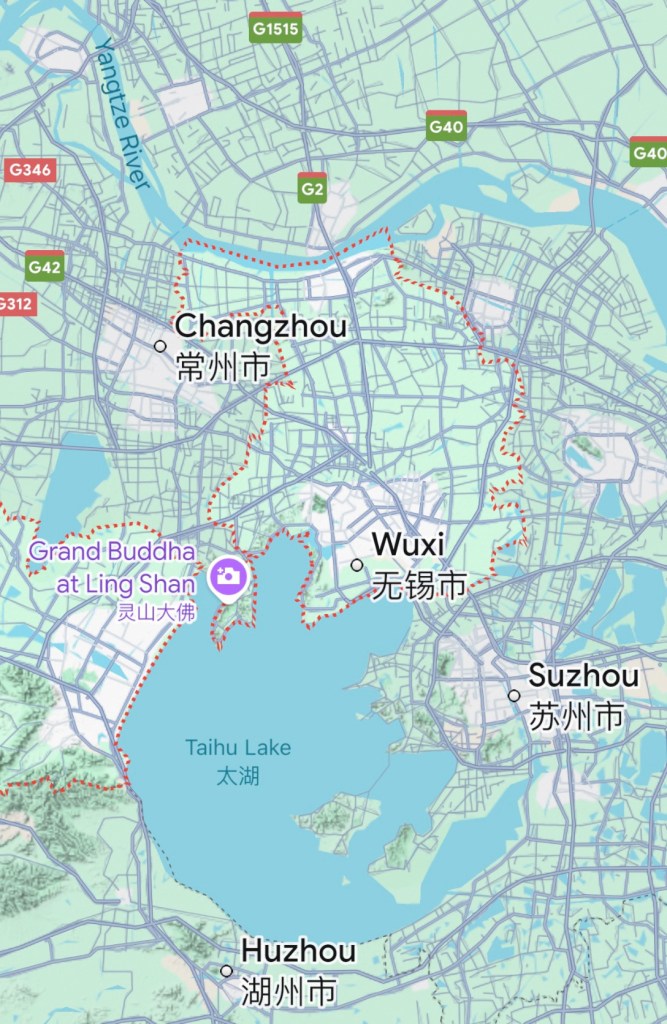
From the map, Chang Zhou and Wu Xi are located near Tai Hu Lake with Yangtze River in the north. This gives a flavour that the origination and practice of this lineage of Flying Star Feng Shui tend to focus on the use of water over mountain.
The Origins of Xuan Kong Feng Shui, a sophisticated system of geomancy, traces its origins back to Guo Pu of the Eastern Jin Dynasty. His classic texts such as Book of Burial and The Green Satchel Classic laid the foundation for this geomancy practice.
Over the centuries, the knowledge was passed down through influential figures like Qiu Yanhai and Yang Yunsong of the Tang Dynasty, Chen Tuan and Wu Kecheng of the Song Dynasty, Wu Jingluan, Leng Qian, and Mu Jiangshi.
The Rise of the Wu Chang School (无常派) ~ During the late Ming and early Qing Dynasties, Jiang Dàhóng acquired the teachings of Wu Ji Zhenren, Wu Tianzhu, and Wuyi Daoren. His successors, including Fan Yibing, Zhu Xiaohe, Yin Yishao, Zhang Xinyan, and Cai Minshan, further developed and refined the system. And later during the Qing Dynasty, Zhang Zhong Shan of Wuxi emerged as a prominent figure, establishing the Wu Chang School of Feng Shui.
Coming to contemporary times, the modern Masters and the wider spread of knowledge. In the this era, Masters like Shen Shaoxun, Kong Zhaosu, Tan Yangwu, Wu Shiqing, Shen Zumian, and You Xuexing (also known as Master Yan Ben) played a crucial role in disseminating Xuan Kong Feng Shui. It was only during this period that the knowledge, previously passed down through secret lineages, began to be publicly documented and shared.
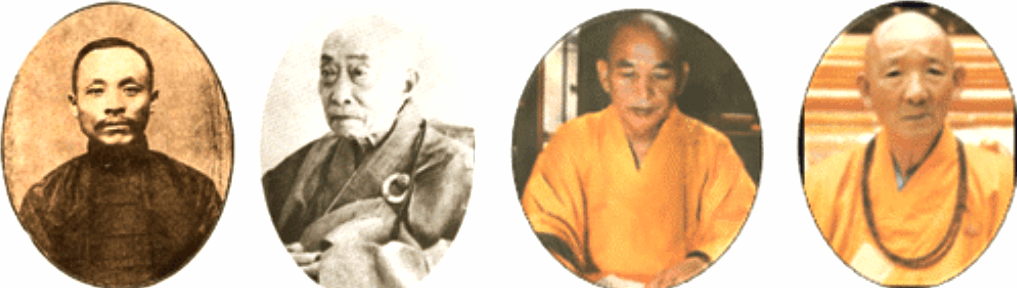
Master Tan Yang Wu (谈养吾) started practicing and teaching Feng Shui in Shanghai. The examples and case study quoted in the book Er Zhai Shi Yan (二宅实験) have taken roots in Shanghai. While the earlier application of Flying Stars focuses on the relationship between the five elements thru the 81 combinations, Er Zhai Shi Yan (二宅实験) explores the applications of connecting and using these Flying Stars.
This book was later compiled by Master Yen Pen, he covered several provinces in China, Borneo and Peninsular Malaysia. The case studies were analyzed and recorded, making them an invaluable source for research on Feng Shui.
Master Yen Pen arrived in Singapore where he became a monk, later moved between Malaysia and Indonesia. He settled in Cameron Highlands where he ran and manage The Sampo Temple.

During this time, Master Yen Pen and Master Sui Ming (another student of Tan Yang Wu) met up at The Sampo Temple in the Cameron Highlands, where they discussed the teachings passed on by Tan Yang Wu.
In 1950, owing to health limitations he returned to Penang where he conducted Feng Shui classes. It was during this period that Master Hong Chuan enrolled and learnt Feng Shui from him.
One of his notable student was Master Hong Chuan. Master Hong Chuan shot to fame in 1973 for his feng shui ability to turn around the fortune of Hyatt Hotel back then. Master Hong Chuan was the abbot of Kong Meng Shan Temple in Singapore.
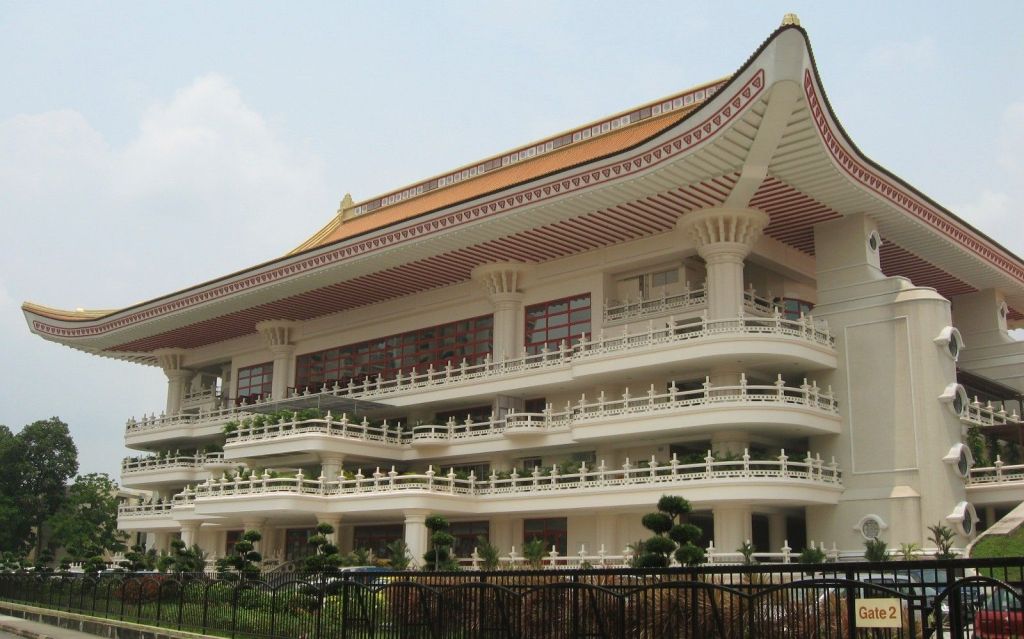

 The Luminary
You must be logged in to post a comment.