About Wu Chang Sect Flying Stars (无常派玄空飞星)

无常 “Wu Chang” refers to Wuxi and Changzhou, two cities in Jiangsu Province, China. This school of Feng Shui is named after its founder, Zhang Zhong Shan 章仲山 (名甫: 字仲山 / 号: 无心道人), a renowned Xuan Kong Feng Shui master from Wuxi.

Zhang Zhong Shan (章仲山) was a notable scholar of the late Qing Dynasty who made significant contributions to the understanding of Xuan Kong (玄空) Feng Shui, particularly by clarifying and simplifying the work of Jiang Da Hong. He is known for founding the Wu Chang Pai (無常派) school of Xuan Kong and for his commentaries on Jiang Da Hong’s writings, making them more accessible.
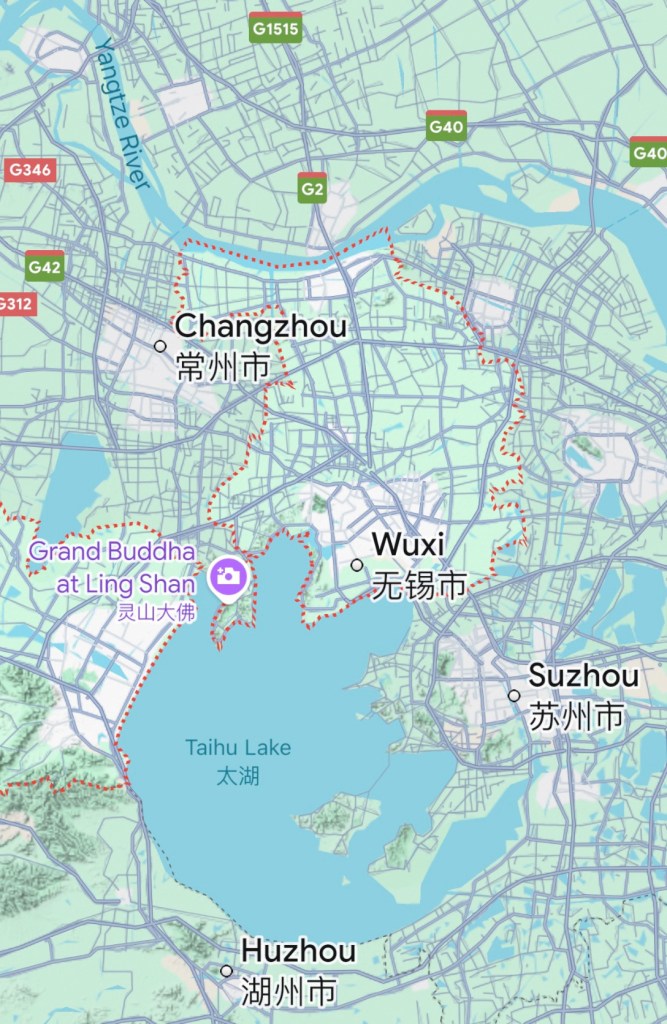
常州 – 无锡 – 太湖

From the map, Chang Zhou and Wu Xi are located near Tai Hu Lake with Yangtze River in the north. This gives a flavour that the origination and practice of this lineage of Flying Star Feng Shui tend to focus on the use of water over mountain.

The Origins of Xuan Kong Feng Shui, a sophisticated system of geomancy, traces its origins back to Guo Pu of the Eastern Jin Dynasty. His classic texts such as Book of Burial and The Green Satchel Classic laid the foundation for this geomancy practice.

Over the centuries, the knowledge was passed down through influential figures like Qiu Yanhai and Yang Yunsong of the Tang Dynasty, Chen Tuan and Wu Kecheng of the Song Dynasty, Wu Jingluan, Leng Qian, and Mu Jiangshi.

The Rise of the Wu Chang School (无常派) ~ During the late Ming and early Qing Dynasties, Jiang Dàhóng acquired the teachings of Wu Ji Zhenren, Wu Tianzhu, and Wuyi Daoren. His successors, including Fan Yibing, Zhu Xiaohe, Yin Yishao, Zhang Xinyan, and Cai Minshan, further developed and refined the system. And later during the Qing Dynasty, Zhang Zhong Shan of Wuxi emerged as a prominent figure, establishing the Wu Chang School of Feng Shui.

Coming to contemporary times, the modern Masters and the wider spread of knowledge. In the this era, Masters like Shen Shaoxun, Kong Zhaosu, Tan Yangwu, Wu Shiqing, Shen Zumian, and You Xuexing (also known as Master Yan Ben) played a crucial role in disseminating Xuan Kong Feng Shui. It was only during this period that the knowledge, previously passed down through secret lineages, began to be publicly documented and shared.
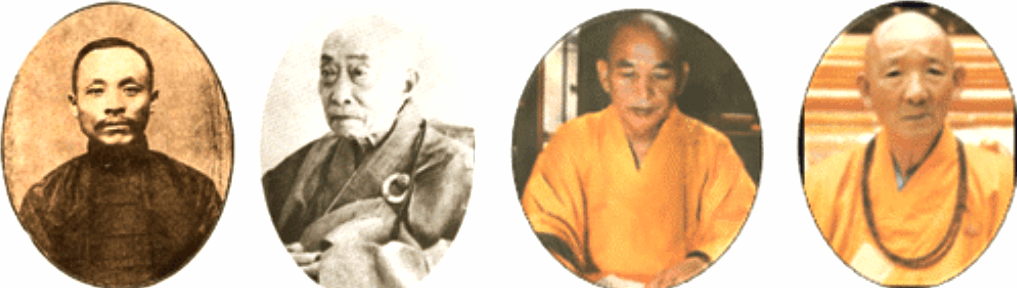
Master Tan, Master Yen Pen, Master Sui Ming, Master Hong Chuan

Master Tan Yang Wu (谈养吾) started practicing and teaching Feng Shui in Shanghai. The examples and case study quoted in the book Er Zhai Shi Yan (二宅实験) have taken roots in Shanghai. While the earlier application of Flying Stars focuses on the relationship between the five elements thru the 81 combinations, Er Zhai Shi Yan (二宅实験) explores the applications of connecting and using these Flying Stars.

This book was later compiled by Master Yen Pen, he covered several provinces in China, Borneo and Peninsular Malaysia. The case studies were analyzed and recorded, making them an invaluable source for research on Feng Shui.

Master Yen Pen arrived in Singapore where he became a monk, later moved between Malaysia and Indonesia. He settled in Cameron Highlands where he ran and manage The Sampo Temple.

Sam Poh Temple, Cameron Highlands

During this time, Master Yen Pen and Master Sui Ming (another student of Tan Yang Wu) met up at The Sampo Temple in the Cameron Highlands, where they discussed the teachings passed on by Tan Yang Wu.

In 1950, owing to health limitations he returned to Penang where he conducted Feng Shui classes. It was during this period that Master Hong Chuan enrolled and learnt Feng Shui from him.

One of his notable student was Master Hong Chuan. Master Hong Chuan shot to fame in 1973 for his feng shui ability to turn around the fortune of Hyatt Hotel back then. Master Hong Chuan was the abbot of Kong Meng Shan Temple in Singapore.
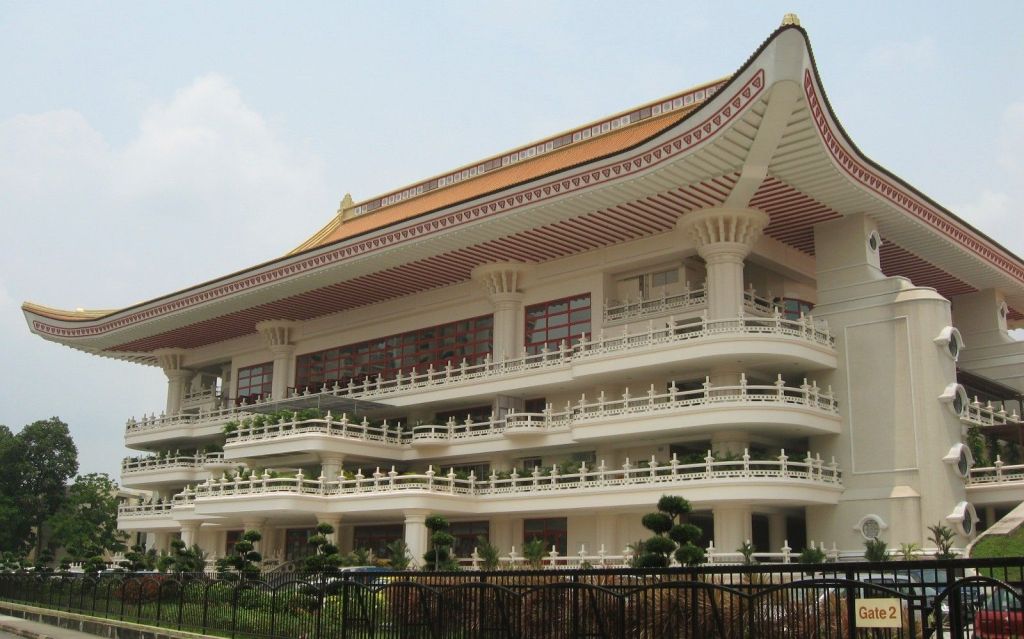
The Venerable Hong Choon Memorial Hall of the temple

Yang Gong’s Memorial Days (杨公忌日)

Yang Gong’s Memorial Days, also known as the “Thirteen Inauspicious Days of Yang Gong,” are a set of special dates in Chinese folklore, traditionally attributed to the famous feng shui master Yang Yun Song from the Tang Dynasty. These days are considered unlucky, and it is advised to avoid significant activities such as weddings, construction, or moving houses.

There are 13 specific days designated as Yang Gong’s Memorial Days following lunar calendar dates:
– 13th day of the first lunar month
– 11th day of the second lunar month
– 9th day of the third lunar month
– 7th day of the fourth lunar month
– 5th day of the fifth lunar month
– 3rd day of the sixth lunar month
– 1st day of the seventh lunar month
– 29th day of the seventh lunar month
– 27th day of the eighth lunar month
– 25th day of the ninth lunar month
– 23rd day of the tenth lunar month
– 21st day of the eleventh lunar month
– 19th day of the twelfth lunar month

Yang Gong’s Memorial Days hold special significance to Feng Shui practitioner due to their association with Yang Yun Song (Yang Gong), a legendary figure in Feng Shui history.

These days are said to have been identified by Yang Gong himself as days when the cosmic energy is unbalanced, making them unsuitable for important activities. And are believed to carry negative energy that could disrupt harmony, prosperity, and success in any undertaking.

In the modern day context, they are seen as official leave days for Feng Shui Practitioners to put away their LuoPan, excuse themselves from consultation and spend time with family and friends.

The Lion Dances Wrongly

The lion dance is a traditional performance with deep cultural significance, primarily found in Chinese culture and other Asian communities. Usually deploy during Lunar New Year, Business Opening and commencement of events/ celebration. Its other purposes include:

1. Cultural Celebration: Often performed during festivals like Chinese New Year, Mid-Autumn Festival, and other important events, it symbolizes good luck, prosperity, and happiness.

2. Warding Off Evil Spirits: The loud drums, cymbals, and vigorous movements are believed to scare away evil spirits and negative energy, bringing protection and blessings.

3. Bringing Good Fortune: The lion is seen as a guardian creature, and its dance is thought to attract good luck and success for businesses, families, and communities.

4. Community Bonding: It fosters unity and cultural pride, often involving local groups or martial arts schools in its performance.

5. Entertainment: And lastly, its vibrant costumes, acrobatic movements, and rhythmic music, the lion dance is a captivating spectacle enjoyed by audiences of all ages.

So, how can lion dance bring good luck or simply just some noisy entertainment? This need us to related back to the traditional Chinese Metaphysic concept which correspondences with the 4 season and 24 solar terms. The concept of 春生, 夏长, 秋收, 冬藏 (Chūn shēng, xià zhǎng, qiū shōu, dōng cáng) that describes the natural cycle of the seasons and their corresponding activities. It reflects the harmony between human life and nature, deeply rooted in Chinese agricultural society and philosophy.

1. 春生 (Chūn shēng) – Spring: Growth and Renewal. Spring is the season of rebirth and new beginnings. Plants sprout, and life awakens after winter. 
  
2. 夏长 (Xià zhǎng) – Summer: Flourishing and Growth. Summer is the season of vigorous growth. Plants and crops thrive under the warm sun. Farmers focus on nurturing and protecting their crops during this time. 

3. 秋收 (Qiū shōu) – Autumn: Harvest and Reaping. Autumn is the season of harvest, when the fruits of labor are collected. A time of gratitude and celebration for the bounty provided by nature. 

4. 冬藏 (Dōng cáng) – Winter: Storage and Rest. Winter is the season of rest and conservation. Crops are stored, and the land lies dormant. Symbolically, it represents introspection, preservation, and patience.

At an energetic level, when the lion dancer dances the swift and powerful acrobatics moves combined with the loud drums, cymbals and gongs. We could all agree that these are movement (kinetic) and sound energy. As well as the possibility of light energy (reflected from the bright costume). What these does is that it activate/ stir up the dormant, quiet and introspective qi that has settled for the past 3 months of winter. Resounding the start of new cycle ~ 春生 (Chūn shēng).

This is similar to the little stuffs or lucky charms older generation people place around the house for good luck or the use of energy stones or water to activate the wealth, relationship and nobleman.

As such, before the lion actually dance, we would prefer the lion to be moving in the wealth, career, relationship, nobleman or academia star area instead of punishment, 3-killings, calamity and sickness star area. Triggering the auspicious qi instead of the negative ones.

The annual flying stars or the 12 generals of Grand Duke is a convenient and effective blueprint tools to pinpoint these sectors so as to put the lion in the right place for the right purpose.

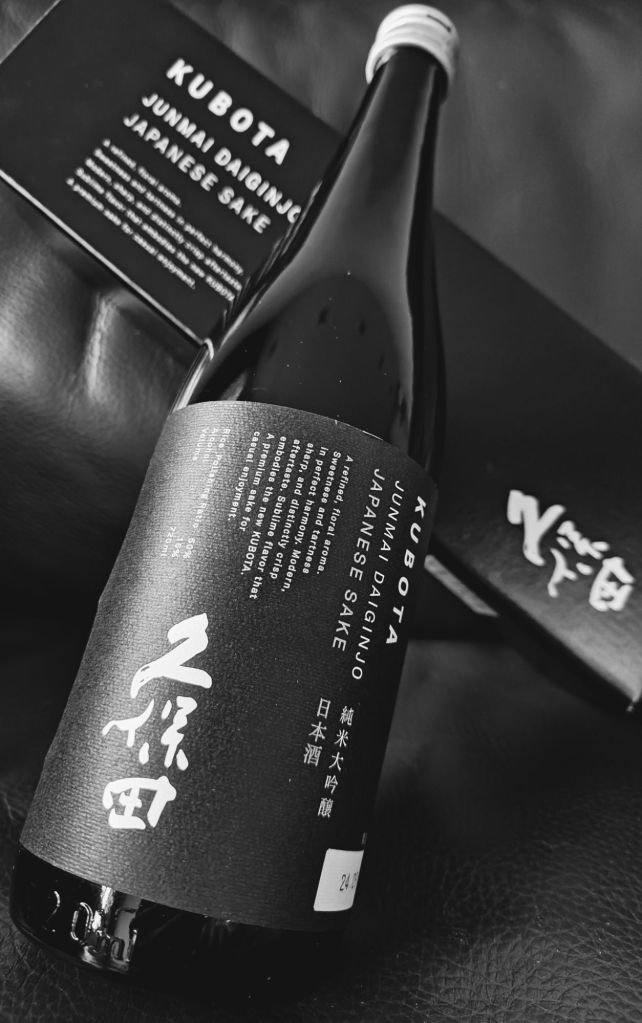
莫思身外无穷事,且尽生前有限杯。

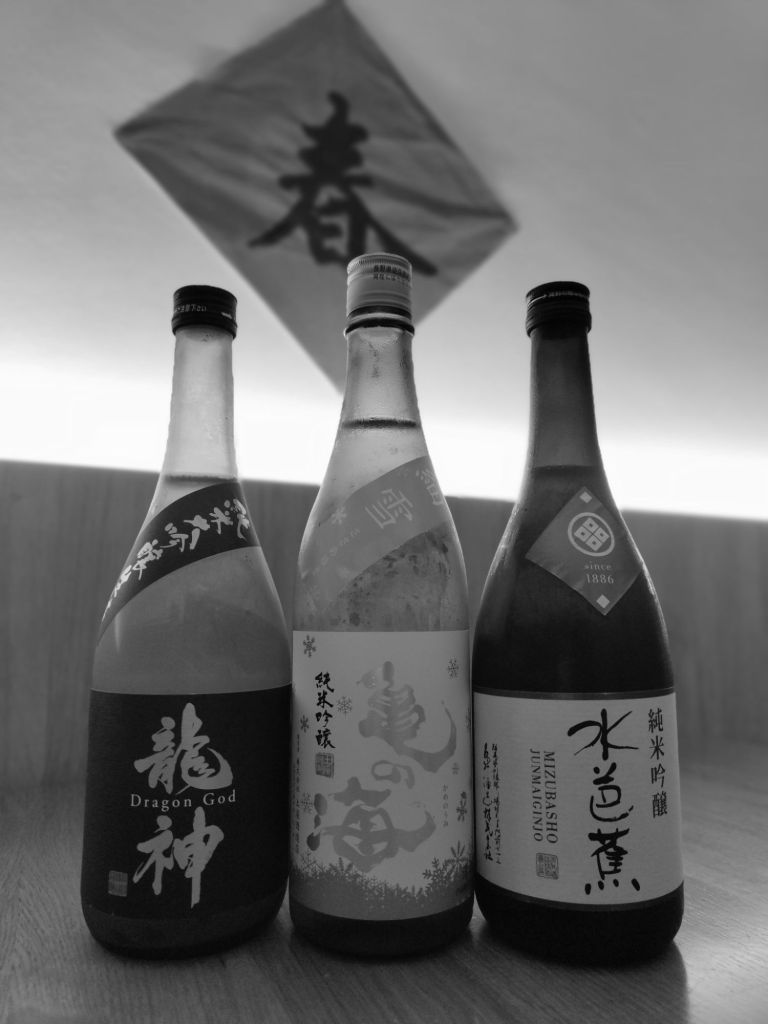
龍神 純米大吟醸 生詰 (50%)
Yamadanishiki rice
Gunma Prefecture
Water: brewery-well water containing snow-melt from oze
Style: floral
Palate: bright and fruity
Nose: ripe melon + kyoho grape

亀の海 細雪 純米吟醸 (59%)
Hitogokochi rice
Nagano Prefecture
Water: medium-soft groundwater from the Chikuma River
Style: crisp and refreshing
Palate: fizziness
Nose: melon + hint of pineapple

水芭蕉 純米 吟醸 (60%)
Yamadanishiki rice
Gunma Prefecture
Water: snow-melted water of the oze
Style: light and aromatic
Palate: crisp and rounded
Nose: aniseed (anise)

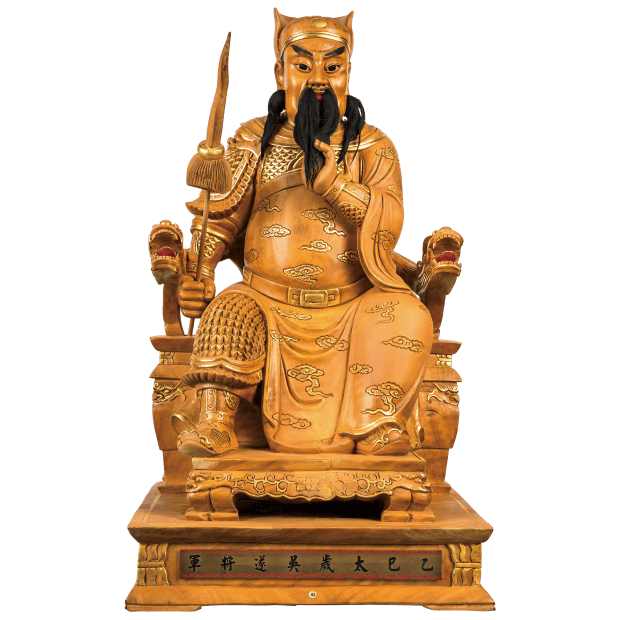
Li Chun ~ 2025 (乙巳年吴遂大将军): 双春闰月逢青蛇,立春四人要避春。


Li Chun 立春 for 2025 starts around 10pm on 3 February 2025. While there is a phenomenon in Singapore of depositing money, there are some cautionary signs to take note about so as to protect oneself at the energetic level.

Individuals with the zodiac signs of Snake 巳,Tiger 寅,Monkey 申,Pig 亥 in either the year, month, day, hour, life and conception palace are recommended to avoid being out in the open during 9pm till 11pm (回避立春时星辰之光既可). This is because during this time, there is a change of cosmic energy from the previous Grand Duke to the new Grand Duke. This energy change will afflict and affect these zodiac signs in one’s natal chart.

For those who are concerned about the flying stars changes during Li Chun, please note that the cosmic energy from the flying stars has already begun since 26 Dec 2024. The calamity and sickness stars would have already settled in by now. Instead, the focus for Li Chun should be to dive into the zodiac signs.

Tiger 寅,1950 1962 1974 1986 1998 2010 year
Between 4 Feb till 4 Mar
3am till 5am

Snake 巳,1953 1965 1977 1989 2001 2013 year
Between 5 May till 4 Jun
9am till 11am

Monkey 申,1956 1968 1980 1992 2004 2016 year
Between 7 Aug till 6 Sep
3pm till 5pm

Pig 亥 1947 1959 1971 1983 1995 2007 year
Between 7 Nov till 6 Dec
9pm till 11pm

The different pillars (i.e. year, month, day, hour) represent different aspects of a person’s destiny chart. To get a grasp of what areas are afflicted via the link here.


The Grand Duke for 乙巳 Wooden Snake year 2025 is General Wu Sui, 吴遂大将军 (字季高). He was an important general in the late Eastern Han Dynasty. He participated in the war to quell the Yellow Turban Rebellion and made contributions to maintaining the rule of the Eastern Han Dynasty (184 AD).

General Wu Sui was a loyal and upright person, and he did not flatter or fawn on others. During his time in office, he cared about the suffering of the people and paid attention to the development of agricultural production and was deeply loved by the people.