QMDJ relating to work and career aspiration, exploring the use of 9 palaces to represent the various aspect.
Open Door generally represent work and career aspiration. Although, traditionally open door mean civil job roles while hidden door relates to military career paths. From experience, it sometimes is read the other way around with open door (having military arts stars as military, uniform group or government career) and hidden door (having academic stars as private, business and non uniform group career).
Next look at the 12 phrases the career is located, and whether it produces the year stem and zodiac signs of the Querent. And also look at yang earth element whether or not is produces the Querent, it is vital as it signals whether the job or career paths yields returns.
Assess the position and element of the grand duke, the horse star and nobleman star. Decide whether or not it is helping the career of choice. Next, also identify the Yang and Yin metal, as these are the difficult people the Querent might face. Sometimes, the difficult people is the Querent themselves.
QMDJ in the aspect of marriage and relationships, using the 9 palaces to represent the various aspect.
Yi Wood (乙) as female and Geng Metal (庚) as male party in the relationship. Depending on the palaces they are at, if the 2 palace are producing or similar in energy signature, this will be read as auspicious.
Traditionally, 6 harmony (六合) is seen as the matchmaker, in this modern day and age, it could be read as a common goal between the couple. Life Door (生门) as the matrimonial home for the couple, this is usually in forecasting divorce cases.
Yin Fire (丁) has an energy signature of a mistress or confidant. And Yang Fire (丙) is the male lover to the wife or girlfriend. And the strength of the relationship is dependant on the energy phrases and the Yin-Yang polarity.
QMDJ in the aspect of health and wellbeing, using the 9 palaces to represent the human body.
Palace 9 or south direction as head area. Expanding into this section, this palace also resonates with eyes, face as well as heart, mind and blood circulation. It can also relate with the spirit, happiness, courtesy and ability to care.
Palaces 4 and 2, namely the southeast and southwest directions representing the left and right shoulders. As well as internal organs, stomach and gastrointestinal matters.
Palaces 3 and 7 represents the East and west direction, in Chinese Metaphysics and Medicine it also link to the body and soul (魂魄). This 2 sectors also resonate with the left and right arms as well as back and abdomen. Waist, lower back as well as movement and mobility. It can also be extended to liver, gut, lungs, respiratory and intestinal matters.
Palaces 8 and 6 which are northeast and northwest sector representing the left and right legs. It could also extend to represent the nose, skin, digestive system, large intestine, muscles and meridians.
Lastly Palace 1, north sector linking with the bladder, kidney and feet. This is the water bearer sector, also associates with reproductive organs as well as intelligence, willpower, worrisome mind and challenges.
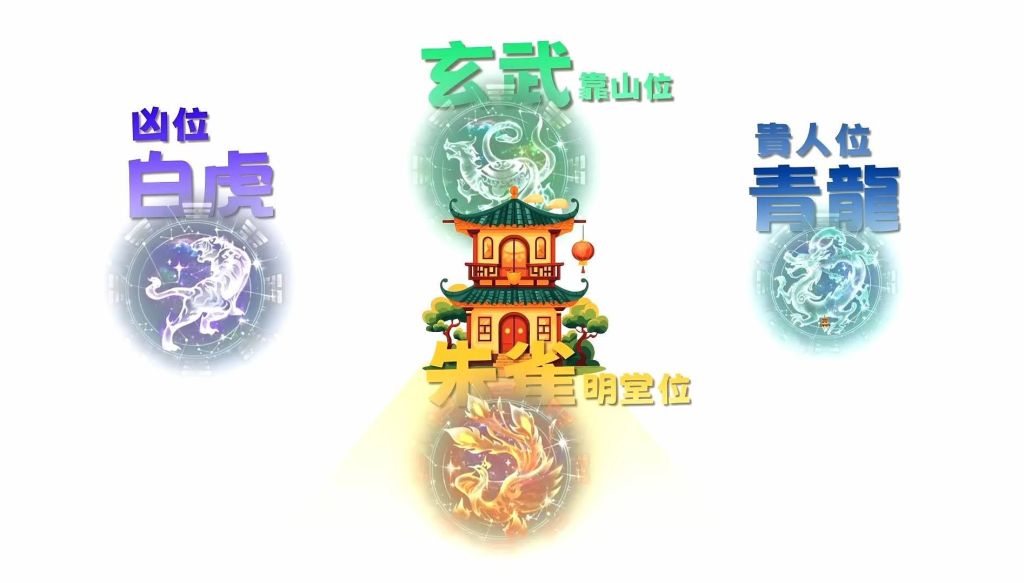
We often heard of this ‘Mystical‘ Feng Shui model (and often clueless about it) where the dragon side must be stronger than tiger side, a solid and broad mountain as backing so that we are blessed with nobleman’s help (贵人星) and an appealing bright hall (明堂) – symbolizing prosperity and smooth journey ahead.
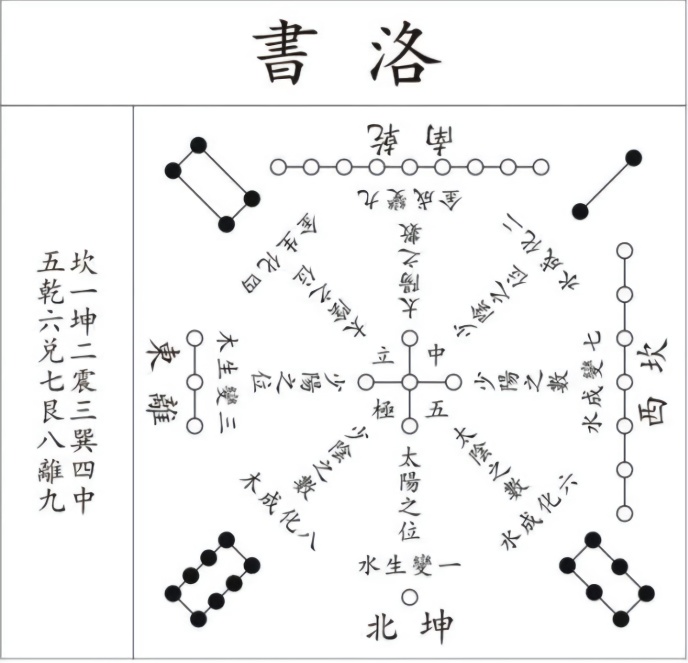
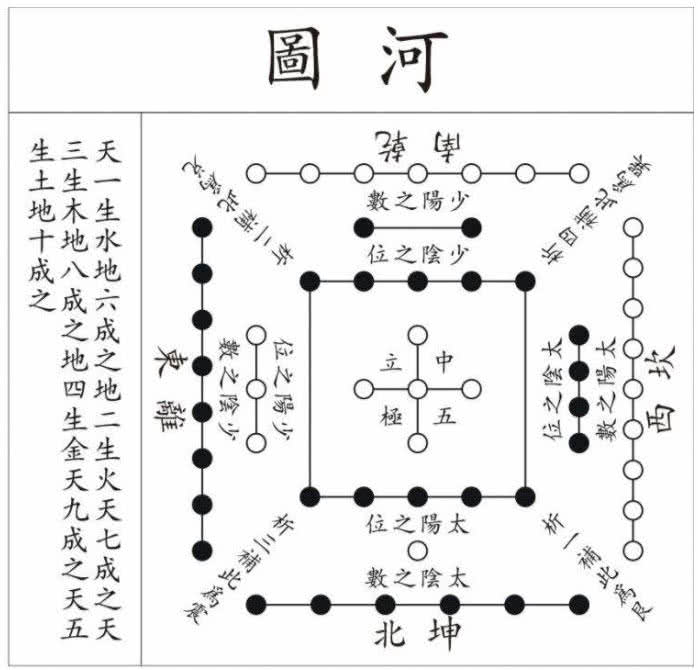
How do we then measure and assess all that? In this article, I share how I’ve use HeTu (河图) numbers as a yardstick to this demystified this ‘Mystical’ model.
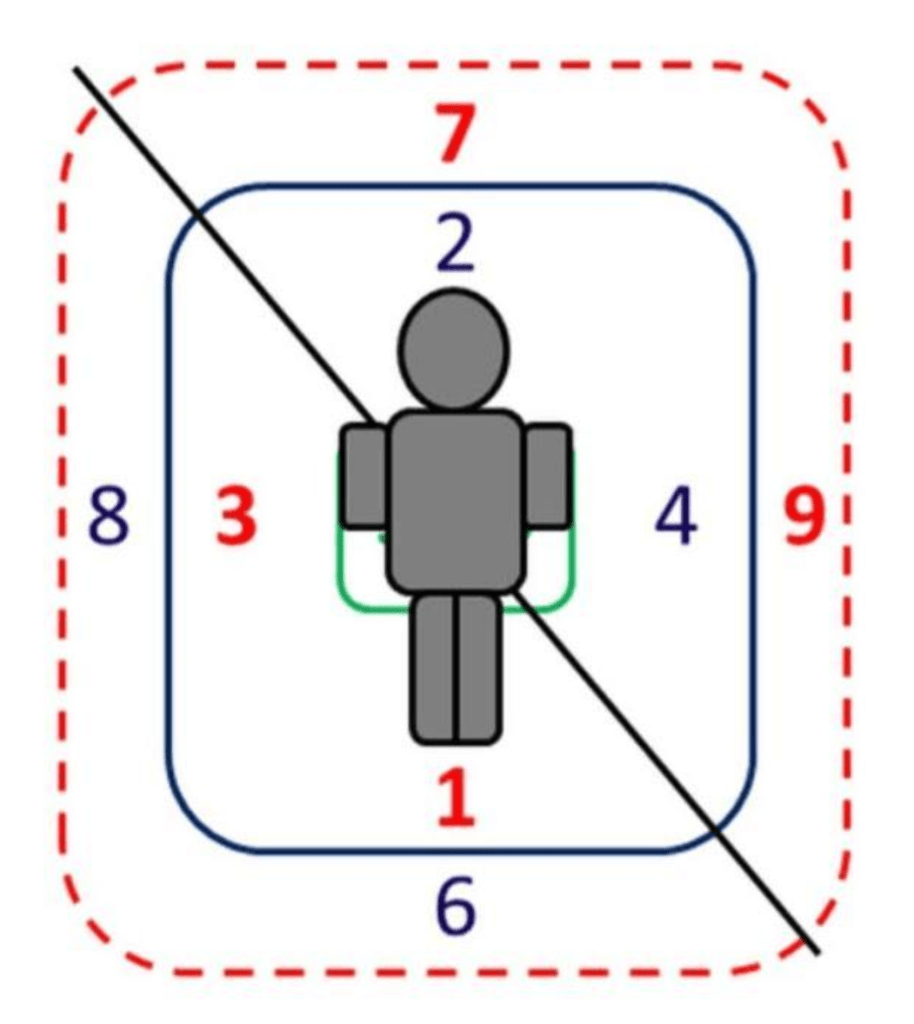
When I apply HeTu (河图) onto this model, the number are divided into 3 layers: 生数,成数,核心 (人).
1, 2, 3 & 4 are known as producing numbers (生数) and they form the inner arrangement called ‘body’ – 体.
6, 7, 8 & 9 are known as forming numbers (成数) and they form the outer arrangement called ‘application’ – 用.
5 resides in the kernel and is the separation distance between producing and forming → e.g. 1 (producing, 生数) + 5 (kernel, 核心) = 6 (forming, 成数).
As such, this draws the distinction between inner and outer arrangement, which gives rise to an important concept where the inner (阴) and outer (阳) arrangements are to be use complementarity (生成合用). This is also known as the layer of 人.
Knowing these numbers aren’t sufficient, as each number is sub-defined into Yin and Yang.
Yin (阴) possesses the properties: Still (静), absorb/receptive (吸收) has a form(有形), internal(内), self (我) and therefore perceived as a ‘body’ (阴体).
Yang (阳) possesses the properties: Movement(動), disperse/radiating (散/發射), formless(無形), external(外), others (他) and therefore perceived as a ‘force field’ known as ‘Qi’ (阳气).
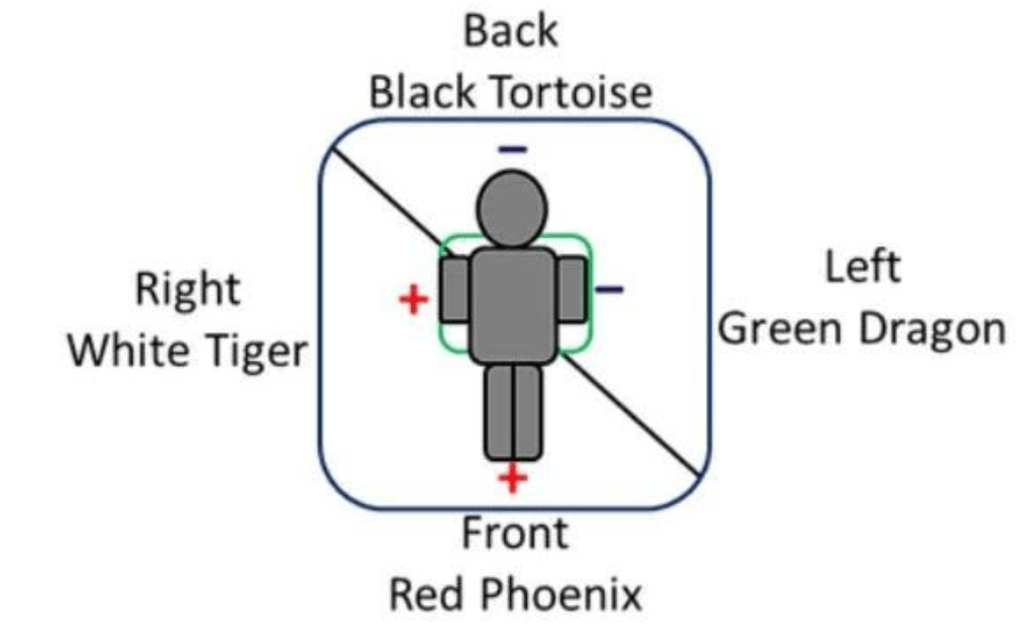
Overlay the Dragon, Tiger, Tortoise, Phoenix over HeTu (河图). This the reason why internally Dragon (Left Side) is Yin (阴) / Quiet (静) therefore favours the external to be Yang (阳) / Movement (动). And on the Tiger (Right Side) is Yang (阳), prefer externalities to be Yin (阴) / Quiet (静).
Yin (阴) is receptive and exhibits an accumulative image. This means habit and specialization are Yin (阴).
Yang (阳) has a ‘kinetic’ nature therefore promotes the ability to innovate and visualize. This means thinking capability and intellectual is Yang (阳).
In summary, could be categorized into 4 broad aspect: Dragon → Rank, Male, Intellectual, Contemplation, Strategy Tiger → Career, Female, Habits Tortoise → Nobility, Elders, Nobleman, Supports, Thinking Phoenix → Specialization, Friends, Kids, Wealth

 The Luminary
You must be logged in to post a comment.